


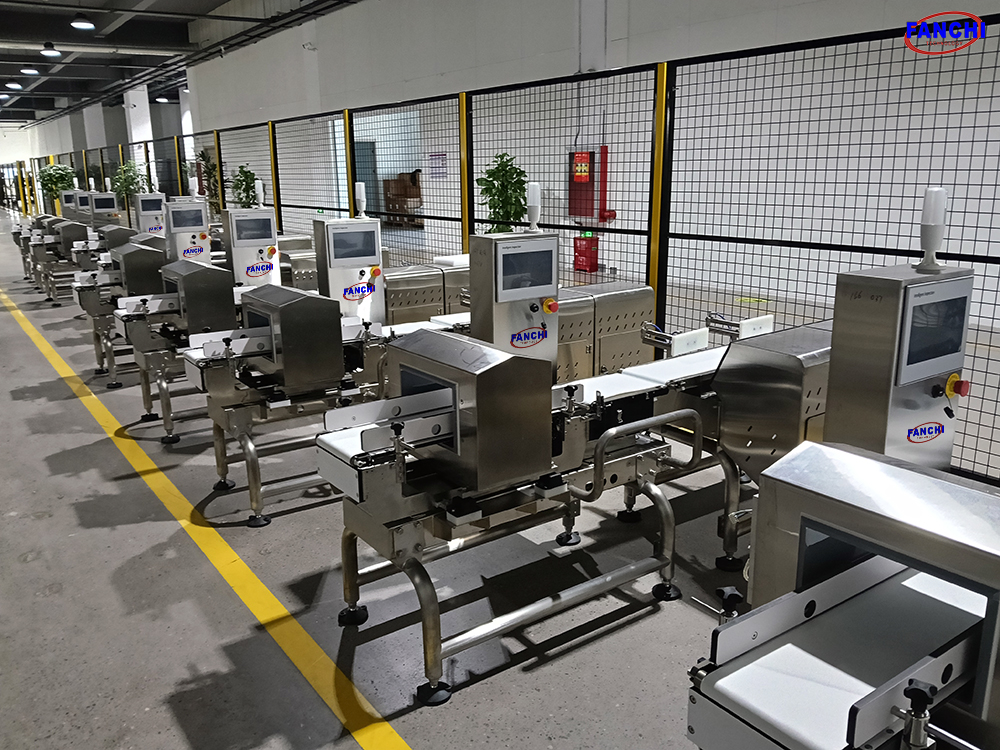
Conveyor Metal Detector for Nuts, Seeds and Dried Food Packaging
Reliable Metal Contamination Inspection for Dry Food Production Lines
Nuts, seeds and dried fruit pass through multiple processing stages before reaching consumers. Cleaning, roasting, mixing, conveying and packaging can all introduce potential metal contamination if equipment components become worn or damaged.
For food manufacturers supplying supermarkets, distributors and private-label brands, reliable metal detection is an important part of finished-product quality control.
A conveyor metal detector for nuts and dried foods allows individual products to pass through a detection tunnel on a moving conveyor. When configured with a suitable alarm or automatic rejection system, it helps identify and separate products that trigger the metal detection system during production.
Shanghai Fanchi-tech Machinery Co., Ltd. provides conveyor metal detection equipment for food processing and packaging applications. The appropriate system depends on the product, package dimensions, packaging material, conveyor requirements and required detection performance.
1. Which Products Can This Conveyor Metal Detector Inspect?
The Fanchi-tech conveyor metal detector product range covers multiple solid-food applications, including nuts, dried foods, cereals, grains, confectionery and packaged food products.
For production lines using the conveyor configuration shown in the factory photograph, the following applications are worth evaluating.
Packaged Nuts and Seeds
Typical products include:
- Almonds and cashews
- Peanuts and pistachios
- Sunflower seeds and pumpkin seeds
- Roasted nut mixes
- Packaged trail mixes
During processing, potential metal contamination can originate from machinery components, fasteners or equipment wear.
A conveyor metal detector can be installed at an appropriate inspection point to check individual bags, pouches or other suitable product formats before case packing.
Dried Fruit Packaging
Products may include raisins, dried mango, dried apple, dried pineapple and mixed dried fruit.
For these applications, the machine should be selected according to package size, product characteristics and line speed. Product testing helps establish whether the selected detector can achieve the required sensitivity under actual operating conditions.
Cereal and Dry Snack Products
Cereal products, dry snack mixes and selected packaged grain products may also be transported through a conveyor metal detector.
For sealed retail packages, the detection system is typically evaluated for installation after packaging and before secondary packaging or dispatch.
Important: The products above are recommended application examples, not verified applications from the specific installation shown in the photograph. Final suitability should be confirmed using representative product samples.
2. How Does a Conveyor Metal Detector Work?
A conveyor metal detector inspects products as they pass through a detection tunnel.
Step 1 — Product Feeding
Products enter the machine on the conveyor belt, either individually or with appropriate spacing.
Step 2 — Metal Detection
As the product passes through the detection area, the detector evaluates its signal for potential metal contamination.
Depending on the model and operating conditions, a properly configured system can detect ferrous, non-ferrous and stainless-steel contaminants.
Step 3 — Alarm or Reject Response
When the detection criteria are met, the machine activates the configured response.
Depending on the selected configuration, this may include an audible or visual alarm, conveyor stop or automatic product rejection.
Step 4 — Rejected Product Handling
Where an automatic rejection mechanism is installed, the identified product can be separated from the accepted product flow.
The reject mechanism should be matched to the package weight, dimensions, production speed and available collection space.
3. Key Features to Consider in a Food Metal Detector
Stainless Steel Construction
Fanchi-tech's FA-MD-II conveyor metal detector specifications list a brushed 304 stainless steel construction.
For dry food production, the final machine should be selected according to the cleaning procedure, operating environment and required protection level.
Stainless steel construction alone does not establish suitability for high-pressure washdown; this should be confirmed for the selected configuration.
Food-Grade Conveyor Belt
A suitable conveyor belt provides stable product transportation through the detection tunnel.
Fanchi-tech lists a food-grade PU conveyor belt for the FA-MD-II model. Belt width, length, speed and product clearance should be matched to the actual packaging line.
Multiple Product Settings
When a factory processes different nut varieties, bag sizes or snack products, product changeover should be simple and repeatable.
The FA-MD-II published specifications include product memory for up to 100 settings. Confirm the functions available on the specific machine being purchased.
Flexible Rejection Options
Different products require different rejection methods. Fanchi-tech lists options such as a pneumatic pusher, pneumatic flipper, drop-belt rejection and belt retraction for its FA-MD-II range.
The appropriate method depends on package format, weight, conveyor speed and the risk of damaging the product during rejection.
Customizable Detection Aperture
The detection tunnel must accommodate the largest product or package that will pass through the machine.
A larger aperture is not automatically better: aperture dimensions are also relevant to achievable detection sensitivity.
The final tunnel size should therefore balance product clearance, line throughput and required detection performance.
These features are described in Fanchi-tech's published conveyor metal detector specifications. Actual functions and configuration should be confirmed for the selected model.
4. Where Should the Metal Detector Be Installed?
For individually packaged nuts, seeds and dried fruit, a conveyor metal detector can be evaluated at a suitable point after the product has been packed.
A typical process may look like this:
Roasting or Drying → Cooling → Mixing → Packaging → Metal Detection → Case Packing
The actual process varies between factories. Some manufacturers may prefer an inspection point before packaging, while others require inspection of finished retail packages.
The decision should consider the contamination risks at each processing stage, the packaging material and whether the product can be conveyed consistently.
Inspecting products after packaging can help identify metal contamination introduced during earlier processing stages, provided the packaging is compatible with the selected detector.
5. Important: Check Packaging Material Before Ordering
Packaging material is a critical consideration in metal detector selection.
Plastic pouches, paper packaging and many other non-metallic materials may be compatible with conventional conveyor metal detection, subject to testing.
However, aluminum foil and metallized film can interfere with conventional metal detectors.
For these applications, discuss the actual packaging structure with the supplier. A metal detector specifically designed for the package or an X-ray inspection system may be more appropriate.
Also consider the inspection objective. Conventional metal detectors identify metal contaminants; they do not provide the same inspection capability as X-ray systems for glass, stones and other dense non-metallic foreign objects.
6. Conveyor Metal Detector vs Gravity-Fed Metal Detector
Not every dry food application requires a conveyor metal detector.
| Application | Equipment to Evaluate |
|---|---|
| Sealed bags of nuts and seeds | Conveyor metal detector |
| Packaged dried fruit | Conveyor metal detector |
| Boxes, trays or other suitable packages | Conveyor metal detector |
| Loose powder or granules falling through a production line | Gravity-fed metal detector |
| Products in metalized or aluminum foil packaging | Compatible metal detection solution or X-ray inspection, subject to evaluation |
The main difference is how the product moves through the inspection system.
A conveyor model inspects products transported on a belt. A gravity-fed system is designed for suitable bulk materials moving through a controlled free-fall path.
Selecting the correct machine type at the beginning can prevent unnecessary changes to the production-line design.
7. How to Choose the Right Machine
Before requesting a quotation, prepare the following information.
Product type: Nuts, seeds, dried fruit, cereal or another food product.
Package format: Pillow pouch, stand-up pouch, tray, carton or unpackaged product.
Product dimensions: Length, width and height of the largest item or package.
Product weight: Typical weight and maximum package weight.
Packaging material: Plastic film, paper, aluminum foil or metallized film.
Production speed: Required number of packages per minute.
Conveyor requirements: Belt width, line height and available installation space.
Inspection requirements: Target metal types, required sensitivity and rejection method.
This information helps Fanchi-tech evaluate an appropriate configuration and determine the testing required for your application.
Why Choose Fanchi-tech?
Shanghai Fanchi-tech Machinery Co., Ltd. supplies industrial inspection equipment for food processing, packaging and manufacturing applications.
Our product range includes:
- Industrial Metal Detectors
- Online Checkweighers
- X-ray Inspection Systems
- Combination Inspection Systems
For conveyor metal detection projects, Fanchi-tech can review the product, packaging material, conveyor dimensions and required inspection performance to help select a suitable machine configuration.
The objective is to match the inspection equipment to the real production process—not simply to select a detector based on price or tunnel size.
Request a Conveyor Metal Detector Quotation
Looking for a conveyor metal detector for nuts, seeds, dried fruit or other dry food packaging?
Send Fanchi-tech the following details:
- Product photos and product type
- Package dimensions and weight
- Packaging material
- Required production speed
- Conveyor width and installation height
- Required detection and rejection functions
Our team can review your requirements and recommend a suitable inspection solution.
Shanghai Fanchi-tech Machinery Co., Ltd.
Contact: Kerry
Email: kerry@fanchitech.net
Mobile / WhatsApp: +86 13917555254
Website: https://fanchitech.net/
Website: https://www.fanchitechnology.com/
YouTube: https://youtube.com/@fanchitech3323
Frequently Asked Questions
Can a conveyor metal detector inspect packaged nuts?
Yes. Conveyor metal detection can be evaluated for packaged nuts and seeds, subject to product dimensions, packaging material and required detection performance.
Can it detect stainless-steel contamination?
A suitable metal detector can be configured to detect stainless steel as well as other metal types. Actual sensitivity depends on the detector, aperture, product characteristics and operating conditions and should be confirmed through testing.
Can it inspect dried fruit in sealed pouches?
Yes, provided the pouch dimensions and packaging material are compatible with the selected configuration. Representative product testing is recommended before purchase.
Can a standard conveyor metal detector inspect aluminum foil packages?
Not necessarily. Aluminum foil and metallized films can interfere with conventional metal detection. A compatible detector or an alternative inspection technology may be needed.
Should I use a conveyor detector or gravity-fed metal detector for grain?
For grain or other products transported on a conveyor, a conveyor detector may be suitable. For loose material falling through a controlled free-fall path, a gravity-fed detector is generally the more appropriate configuration to evaluate.
How do I get a quotation?
Provide your product type, product and package dimensions, weight, packaging material, production speed and required detection performance. Fanchi-tech can use this information to recommend a suitable configuration.
Post time: Oct-10-2026